
Category: Fabric Education Read Time: 7 minutes Author: Qumash Lab Team
Introduction You're sourcing t-shirts for your brand. One supplier offers 140 GSM, another offers 180 GSM, and a third offers 160 GSM at a higher price than the 180 GSM option. Confused? You're not alone. GSM is one of the most important specifications in apparel manufacturing, yet it's one of the least understood by new brand owners. Getting it wrong means products that feel cheap, don't match customer expectations, or cost more than they should. This guide explains GSM in plain terms — what it means, how it affects your products, and exactly which GSM ranges to choose for different garment types.
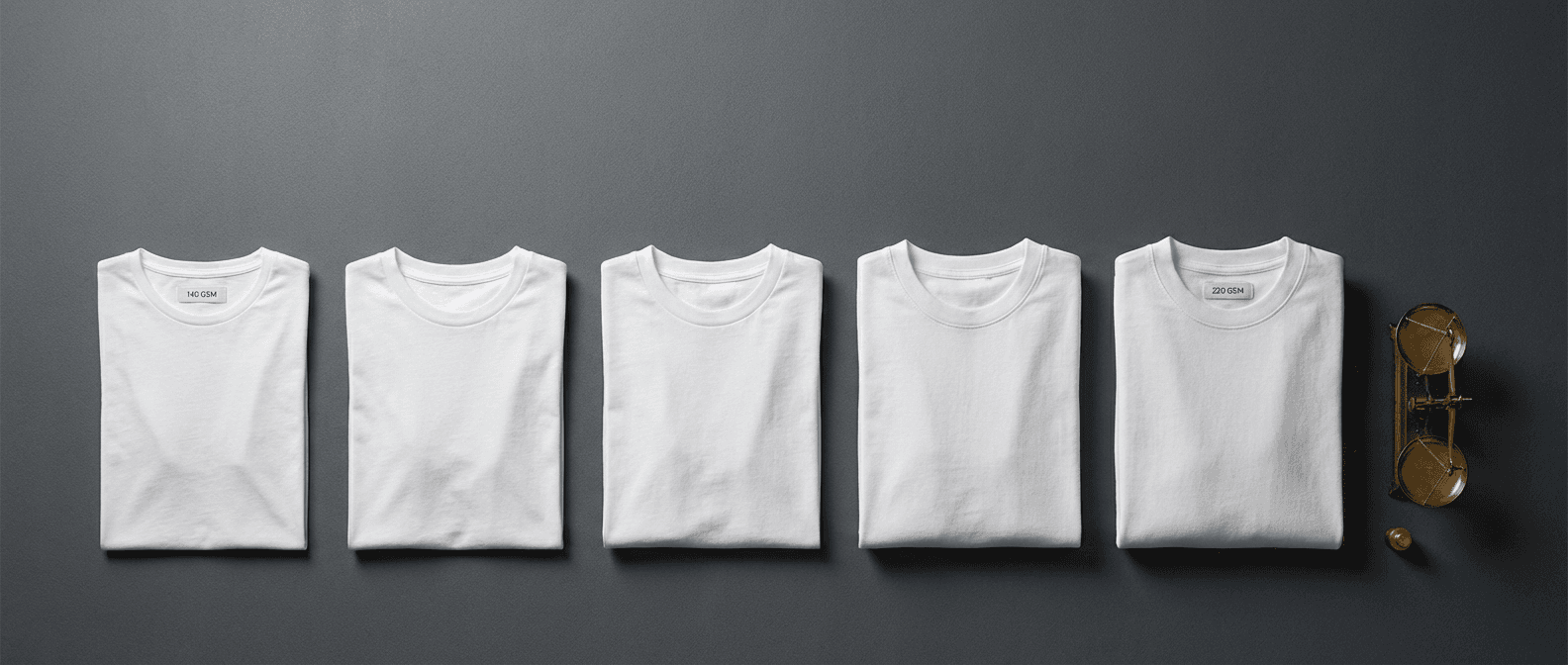
What Does GSM Stand For? GSM stands for Grams per Square Meter. It's a measurement of fabric density — specifically, how much one square meter of fabric weighs in grams. That's it. No complex formula. No hidden meaning. A fabric with 180 GSM means if you cut exactly one square meter of that fabric and weigh it, it would weigh 180 grams. Higher GSM = Heavier, denser, typically thicker fabric Lower GSM = Lighter, thinner, more breathable fabric Simple concept. But the implications for your products are significant.
Why GSM Matters for Your Brand GSM affects almost everything about how your garment looks, feels, performs, and is perceived by customers. Feel and Hand Higher GSM fabrics feel more substantial in hand. When a customer picks up your product, GSM is the first thing they unconsciously judge. A 140 GSM t-shirt feels flimsy compared to a 180 GSM shirt. That split-second impression shapes their perception of your brand. Durability Generally, higher GSM means more fiber content, which translates to better durability. Higher GSM garments withstand more wash cycles, maintain shape longer, and resist wear better. Opacity Lower GSM fabrics can be see-through, especially in white or light colors. Nothing damages brand perception faster than a customer realizing their new white t-shirt is transparent. Higher GSM provides better coverage. Drape and Fit GSM affects how fabric hangs on the body. Lower GSM creates a more flowing, relaxed drape. Higher GSM creates a more structured, substantial fit. Neither is better — but each serves different style aesthetics. Print Quality Fabric weight impacts print results. Very low GSM fabrics may not hold heavy ink deposits well. Very high GSM fabrics may require adjusted print techniques. Mid-range GSM typically offers the best print versatility. Seasonality Lower GSM suits summer and warm climates. Higher GSM suits autumn, winter, and cooler climates. Your target market's geography matters. Cost More grams means more raw material. Higher GSM fabrics cost more. This affects your per-unit cost and ultimately your margins.
GSM Ranges Explained Let's break down GSM into practical categories. Ultra-Light: 100-130 GSM Characteristics: Very thin and lightweight. Highly breathable. Often see-through in light colors. Delicate feel. Economical on material cost. Common Uses: Summer promotional t-shirts. Underlayers and undershirts. Sleepwear. Lightweight fashion tees where sheerness is acceptable or intentional. Single-use or disposable garments. Honest Assessment: This range is too light for most retail brands. Products feel cheap, lack durability, and create transparency issues. Unless you're specifically designing for ultra-lightweight applications, avoid this range. Customer Perception: "Thin and cheap"
Light: 130-150 GSM Characteristics: Light but more substantial than ultra-light. Breathable and comfortable in warm weather. May still have slight transparency in white. Good drape, relaxed fit. Common Uses: Summer t-shirts. Casual everyday wear in warm climates. Athletic wear where breathability is prioritized. Fashion brands going for a relaxed, flowy aesthetic. Honest Assessment: Acceptable for summer-focused or fashion-forward brands. Works well in darker colors where opacity isn't an issue. Not ideal as a year-round standard weight. Customers in cooler climates may perceive it as too thin. Customer Perception: "Light summer wear"
Mid-Weight: 150-180 GSM Characteristics: The sweet spot for t-shirts. Substantial feel without being heavy. Good opacity in all colors. Versatile across seasons. Excellent print surface. Balances comfort and durability. Common Uses: Retail-quality t-shirts. Everyday basics. Brand merchandise. Most commercial t-shirt applications. Recommended Breakdown: 150-160 GSM works for warmer climates and fashion-forward fits. 160-170 GSM is the true sweet spot — substantial but not heavy. 170-180 GSM provides premium feel, excellent for brands emphasizing quality. Honest Assessment: This is where most successful t-shirt brands operate. The 160-180 GSM range specifically hits the balance customers expect from quality apparel. When in doubt, aim for 165-175 GSM. Customer Perception: "Quality, proper t-shirt"
Heavy: 180-220 GSM Characteristics: Noticeably substantial and weighty. Excellent durability and structure. Premium feel. Perfect opacity. Holds shape exceptionally well. Slightly less drape, more structured fit. Common Uses: Premium and luxury t-shirts. Streetwear brands. Heavyweight basics. Products positioned on durability and quality. Recommended Breakdown: 180-190 GSM offers premium feel while remaining comfortable. 190-200 GSM enters true heavyweight territory. 200-220 GSM is thick, structured, and distinctly premium. Honest Assessment: This range signals premium positioning. Customers immediately notice the weight and associate it with quality. However, it may be too heavy for warm climate markets. Higher material cost impacts margins. Best for brands where quality perception justifies higher pricing. Customer Perception: "Premium, built to last"
Ultra-Heavy: 220+ GSM Characteristics: Very thick and heavy. Extremely durable. Stiff initially, softens with wear. Makes a strong tactile impression. Highest material cost. Common Uses: Heavyweight streetwear. Oversized fashion pieces. Workwear. Statement pieces where weight is part of the design. Honest Assessment: This is a niche range. The weight is immediately noticeable — some customers love it, others find it uncomfortable. Not suitable for warm climates. Works well for specific streetwear aesthetics and oversized styles where the heaviness is intentional. Customer Perception: "Seriously heavy, statement piece"
GSM by Product Type Different garments require different GSM ranges. Here's a comprehensive guide: T-Shirts Market PositionRecommended GSMNotesBudget/Promo130-150Cost-focused, acceptable qualityStandard Retail150-170Good balance, most commonPremium170-190Noticeably better feelLuxury/Streetwear190-220+Statement weight Our Recommendation: 160-180 GSM for brands building reputation on quality.
Polo Shirts Market PositionRecommended GSMNotesBudget170-190Minimum for acceptable piqueStandard190-220Proper polo weightPremium220-250Substantial, luxury feel Our Recommendation: 200-220 GSM for retail-quality polos.
Hoodies (Fleece) Market PositionRecommended GSMNotesLightweight240-280Summer/transitional hoodiesStandard280-320Year-round comfortPremium320-380Thick, warm, substantialHeavyweight380-450+Winter, streetwear statement Our Recommendation: 300-350 GSM for quality hoodies that feel premium without being excessively heavy.
Sweatshirts (Crew Neck) Market PositionRecommended GSMNotesLightweight240-280Layering pieceStandard280-320Classic sweatshirt feelPremium320-380Substantial warmth Our Recommendation: 280-340 GSM depending on target climate.
Joggers/Sweatpants Market PositionRecommended GSMNotesLightweight240-280Summer, loungewearStandard280-320Everyday comfortPremium320-380Thick, structured Our Recommendation: 280-320 GSM for versatile year-round joggers.
Tank Tops Market PositionRecommended GSMNotesFitness/Performance120-140Maximum breathabilityFashion140-160Light but not transparentSubstantial160-180Fuller coverage Our Recommendation: 140-160 GSM for fashion tanks, lower for pure athletic use.
Long Sleeve T-Shirts Market PositionRecommended GSMNotesLightweight140-160Layering, warm climateStandard160-180Versatile year-roundHeavier180-200Cooler climates Our Recommendation: 160-180 GSM, same principle as regular t-shirts.
GSM and Fabric Type Interaction Here's something many new brands miss: GSM alone doesn't tell the whole story. The same GSM in different fabric types feels completely different. 180 GSM Ring-Spun Cotton feels softer and more refined than 180 GSM Carded Cotton despite identical weight. 180 GSM Cotton feels very different from 180 GSM Cotton-Polyester Blend — the blend may feel thinner because polyester fibers are lighter. 280 GSM French Terry feels lighter and more breathable than 280 GSM Brushed Fleece because of the different internal structures. When evaluating suppliers, always request samples. GSM is a starting point, not the complete picture.
Common GSM Mistakes to Avoid Mistake 1: Choosing Based on GSM Alone A 180 GSM shirt from Supplier A may feel completely different from 180 GSM from Supplier B due to cotton quality, spinning method, and finishing. Always request and compare physical samples. Mistake 2: Going Too Light to Save Money The cost difference between 150 GSM and 170 GSM is minimal per unit — often just $0.30-0.50. But the perceived quality difference is significant. Don't sacrifice brand perception for pennies. Mistake 3: Going Too Heavy Without Purpose Ultra-heavy 220+ GSM t-shirts aren't automatically better. They can be uncomfortable in warm weather, more expensive to ship, and may not suit your brand aesthetic. Match GSM to purpose. Mistake 4: Ignoring Climate A 200 GSM t-shirt perfect for European markets may be too heavy for Middle Eastern or Southeast Asian customers. Consider where your products will be worn. Mistake 5: Inconsistent GSM Across Products If your t-shirts are 180 GSM and your long sleeves are 140 GSM, customers notice the inconsistency. Maintain similar quality standards across your line.
How to Verify GSM Don't just trust supplier claims. Here's how to verify: Method 1: Request Test Reports Reputable manufacturers can provide fabric test reports showing actual GSM measurements. Ask for third-party lab reports for complete assurance. Method 2: Simple Weight Test If you have samples, weigh a known area. Cut a 10cm x 10cm square, weigh it in grams, then multiply by 100 to get GSM. Not perfectly precise, but reveals major discrepancies. Method 3: Compare Against Known Standards Keep samples of fabrics with verified GSM. Compare new samples against these benchmarks. Your hands will learn to detect differences quickly. Method 4: Ask for Multiple Samples Request samples from different production batches. Consistent GSM across batches indicates quality control. Variations indicate potential problems.
GSM and Your Pricing Strategy Higher GSM generally means higher cost. Here's how to think about it strategically: Calculate Your Cost Difference A 20 GSM increase might add $0.40-0.80 to your unit cost. On a $15 retail t-shirt, that's a 3-5% cost increase. Calculate Your Perceived Value Increase That same 20 GSM increase may allow you to raise retail price by $2-3, as customers perceive higher quality. That's a 13-20% price increase. The Math Usually Favors Quality Spending slightly more on better GSM often yields disproportionately higher margins because customers pay premiums for perceived quality.
Our GSM Recommendations Summary ProductBudgetStandardPremiumT-Shirt140-150160-175180-200Polo180-190200-220230-250Hoodie260-280300-340350-400Sweatshirt260-280290-330340-380Joggers260-280290-320330-360
Working with Qumash Lab We offer fabrics across all GSM ranges discussed in this guide. More importantly, we help you choose the right GSM for your specific products, target market, and brand positioning. Our sample kits include fabric swatches at different GSM levels so you can feel the differences yourself. We believe touch is the best teacher — specifications on paper only go so far. When you request a quote, we'll discuss GSM recommendations based on your product type, target market climate, and quality positioning. We'd rather help you choose the right fabric than sell you the wrong one.
Conclusion GSM is simple in definition but powerful in impact. It shapes how customers perceive your products from the first touch to the hundredth wash. The key principles to remember: Higher GSM isn't always better — it should match your product purpose and market. The 160-180 GSM range is the sweet spot for most t-shirts. Always verify GSM with physical samples, not just specifications. Consider GSM alongside fabric type for complete evaluation. Match GSM to your brand positioning and pricing strategy. Invest time in understanding GSM, and you'll make better sourcing decisions that your customers notice — even if they can't explain why your products feel better than competitors.
Want to feel the difference GSM makes? Order our sample kit with fabric swatches across multiple GSM ranges. Compare 150, 170, and 190 GSM cotton yourself. Touch is the best teacher. [Request Sample Kit] [Get a Quote]
This article is part of Qumash Lab's Fabric Education series, helping brands make informed manufacturing decisions.